REUTERS
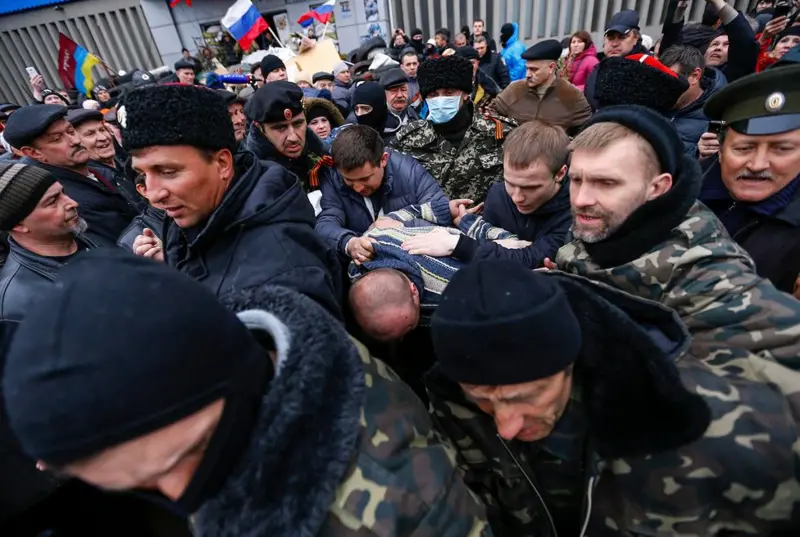
Crowd near the SSU building in Luhansk
Since the spring of 2014, unrest has been raging in the regions of eastern Ukraine. The “anti-Maidan” groups, which gathered supporters of President Viktor Yanukovych, began to be strengthened by people and money from Russia. Then, under the guise of “people’s revolutions”, parts of the Donetsk and Luhansk regions ceased to obey the authorities in Kyiv.
Immediately after the annexation of Crimea by the “little green men” – the Kremlin did not immediately recognize the participation of the Russian military in the seizure of the peninsula – in large cities of Eastern and Southern Ukraine, clashes between demonstrators from local “anti-Maidan” groups and the authorities began.
The unrest spread to Donetsk, Luhansk, Kharkiv and Odessa. The protests quickly became overgrown with Russian symbols and pro-Russian slogans. As the participants and organizers of these protests later recalled, Russia supported them with money and people.
GETTY IMAGES
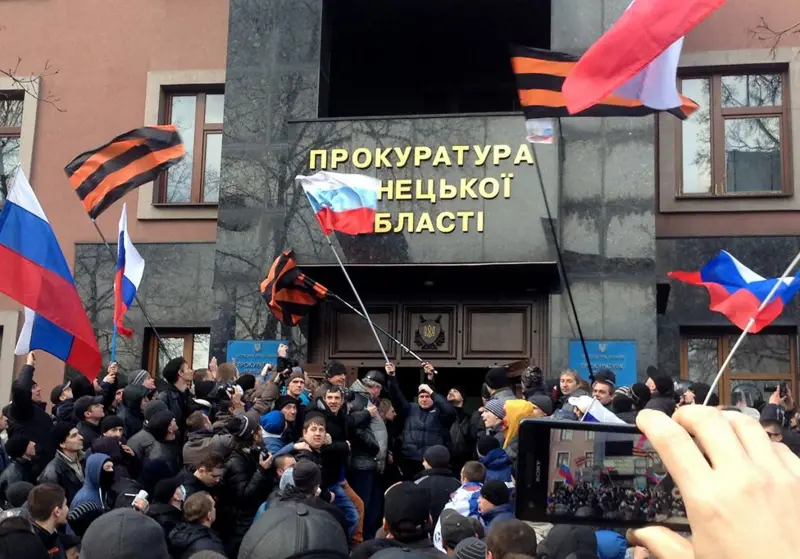
Crowd near the regional prosecutor’s office building in Donetsk
The level of aggression was growing, and the Ukrainian authorities, shocked by the seizure of Crimea and the holding of a “referendum” there, were often unable to oppose the “anti-Maidan” with anything but unarmed police cordons.
In several cases, demonstrators smashed the buildings of police departments (the National Police of Ukraine appeared in 2015), prosecutors’ offices, and tore down Ukrainian flags from regional administrations.
On April 7, a group of activists announced the creation of the so-called “Donetsk People’s Republic.” A similar entity was proclaimed in Luhansk three weeks later, on April 27.
GETTY IMAGES
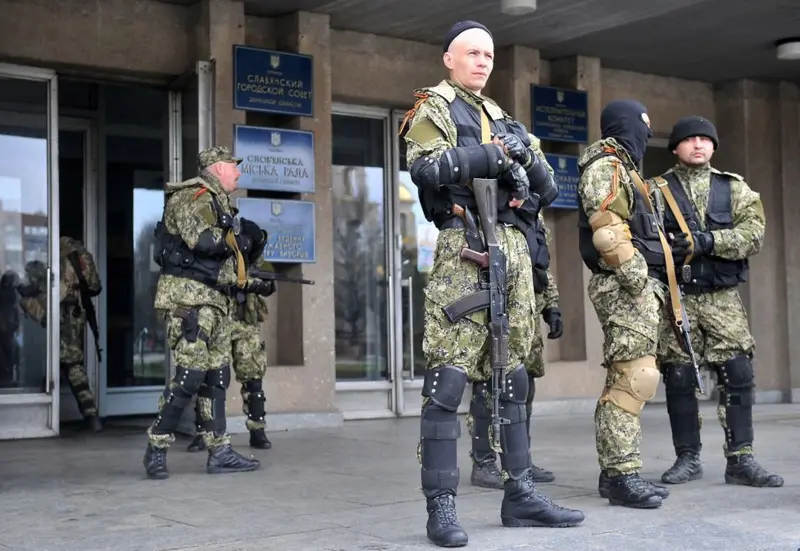
Armed people near the administration of Sloviansk
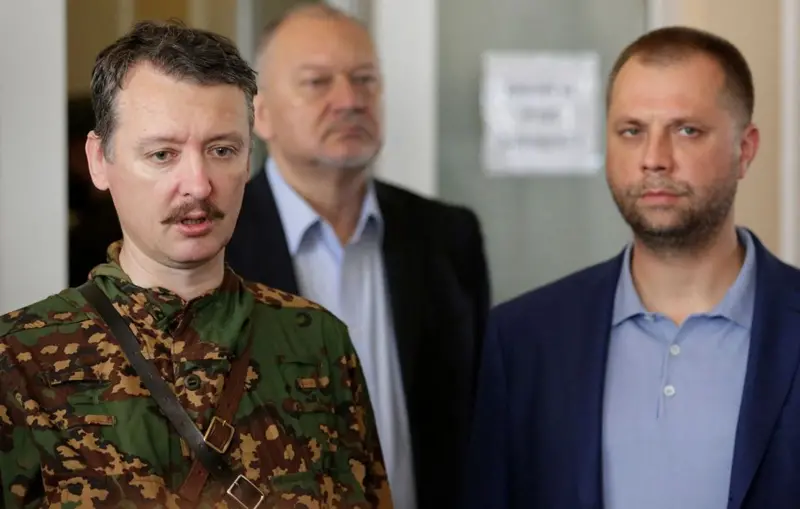
One of the key dates in the history of Russian aggression in Donbas is considered to be April 12, when several dozen well-armed people seized administrative buildings in Sloviansk. These people, many of whom were Russian citizens and had previously participated in the seizure of government bodies in Crimea, were commanded by Igor Strelkov (Girkin), a retired colonel of the Russian FSB (uk. FSS).
Later, he did not hide his participation in the capture of Slavyansk.
He said: “If our detachment had not crossed the border, everything would have ended as in Kharkiv, as in Odessa. There would have been several dozen people killed, burned, arrested. And that would have been the end of it”.
GETTY IMAGES
Among the leaders of the self-proclaimed “DPR” (Donetsk People’s Republic) were Igor Strelkov (left) and Oleksandr Boroday
But, as in the case of the seizure of Crimea, Russia insisted that everything that was happening was an exclusively internal Ukrainian matter and was an outpouring of discontent among local residents.
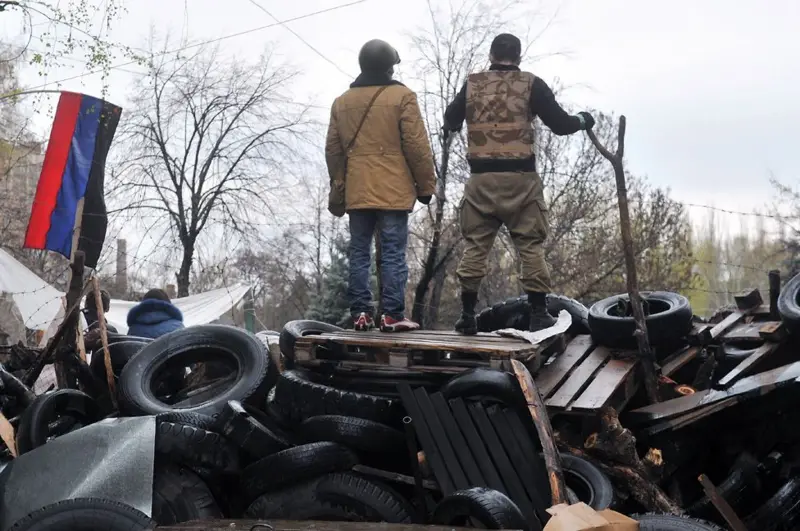
In Sloviansk, the barricades at the entrance to the city were often guarded by people in civilian clothes. It was difficult to determine where they were from and whether they were actually local residents.
GETTY IMAGES
Barricades in Slavyansk
Within a few weeks, the authorities in Kyiv lost control over the administrations in some other cities in the Donetsk and Luhansk regions. A dual system of power prevailed in the regional centers.
But the Ukrainian authorities no longer controlled the border with Russia in the Luhansk region, and pro-Russian groups received weapons and fighters through it.
GETTY IMAGES
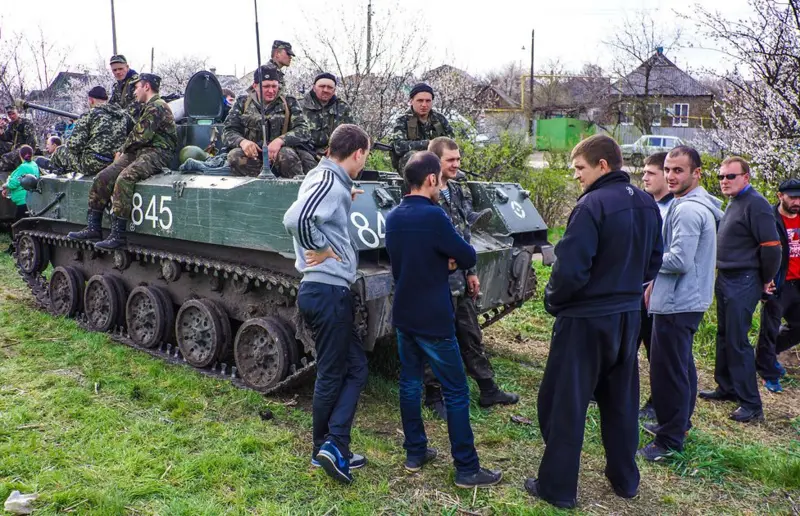
Civilians block Ukrainian military equipment
Kyiv’s attempts to stop the change of power by force were unsuccessful – poorly armed local units of the Armed Forces of Ukraine complained about the lack of clear orders and often avoided armed confrontation with “militia” from among local residents or militants who imitated them.
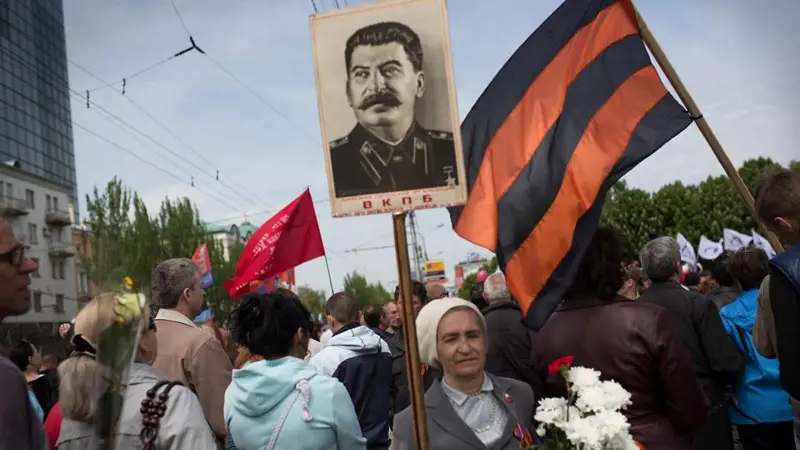
GETTY IMAGES
May Day demonstration in Donetsk
The authorities of the self-proclaimed entities used the beginning of May for mass rallies in support of the “people’s republics.”
Both were preparing for the vote: when announcing the creation of the “Donetsk People’s Republic”, they announced the holding of a referendum on self-determination for the “DPR”.
At the end of April, the authorities of the “LPR” (Luhansk People’s Republic) also announced the preparation of a similar vote.
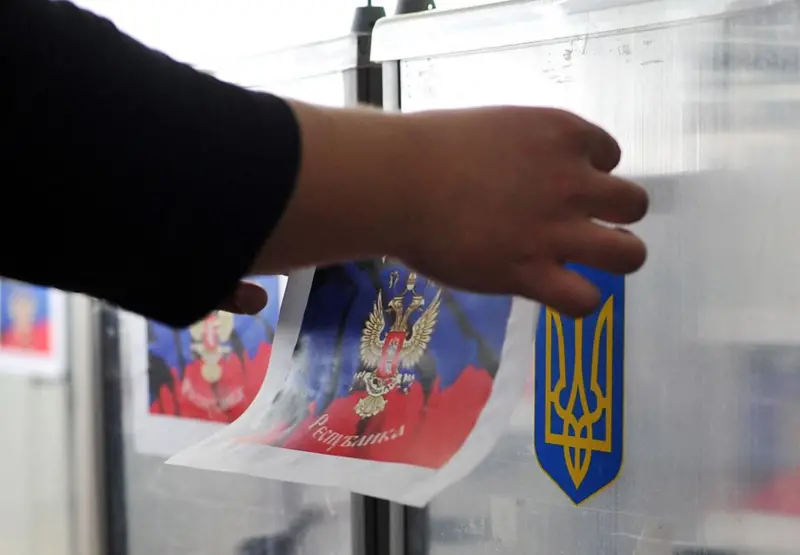
GETTY IMAGES
Changing the symbols on the ballot box
As in the case of the vote in Crimea, the “referendums” did not meet international standards at all: there was no agreement on a plebiscite with the Ukrainian authorities, there was no equal opportunity for campaigning for opponents of the formation of “republics”: in the region where blood had already been shed, a mass exodus of the population began. The organizers of the “referendum” did not even have access to up-to-date data on voters.
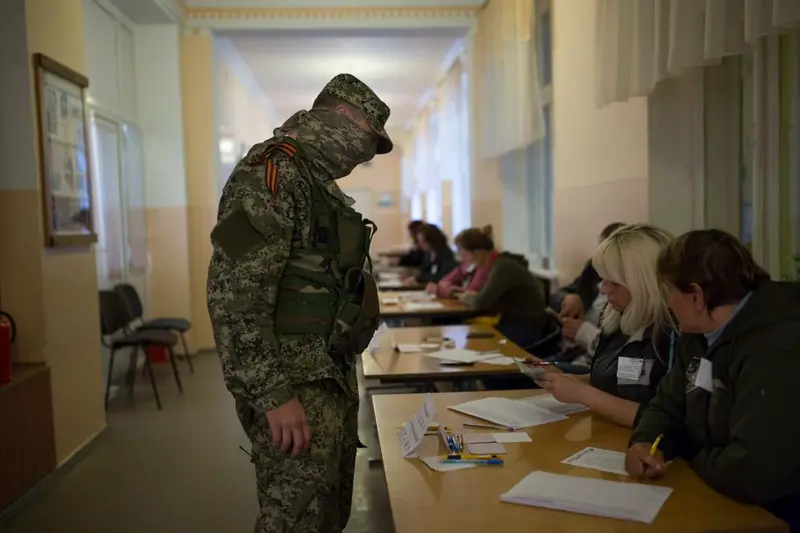
GETTY IMAGES
A fighter of one of the armed formations of the self-proclaimed “DPR” at a polling station in captured Kramatorsk
However, none of this prevented: on May 11, voting was held in the so-called “DPR” and “LPR” with an unclear number of participants and an opaque vote counting procedure.
Their results resembled the results of the “referendum” in Crimea: the organizers announced that 89% in the “DPR” and 96% in the “LPR” supported the acts of state independence.
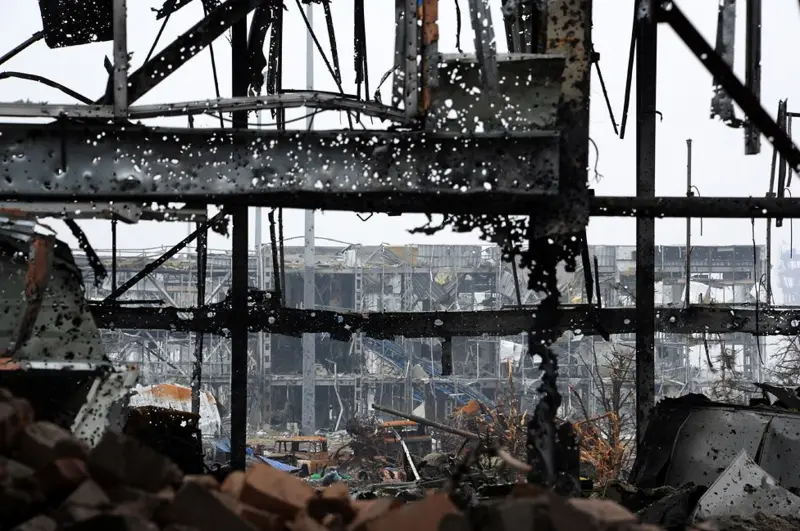
GETTY IMAGES
Destroyed Donetsk Airport, rebuilt for the 2012 European Football Championship
On May 6, separatists in the “DPR” made their first attempt to seize Donetsk’s Prokofiev International Airport. The attack on the airport was the first time a large group of Russian troops had been involved in fighting in eastern Ukraine, and it turned out to be a disaster.
The fighting for the airport lasted eight months, and in January 2015, the Ukrainian authorities admitted that they no longer controlled even the approaches to the airport. It was completely destroyed.
GETTY IMAGES
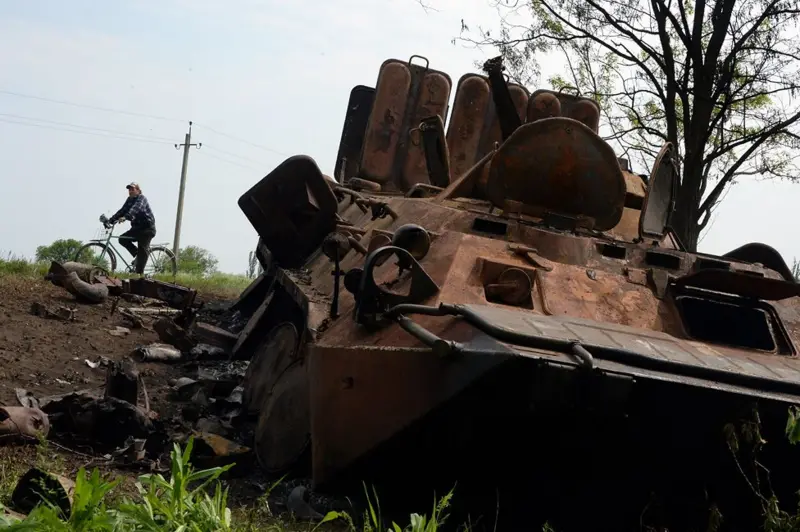
Burnt armored personnel carrier of the Armed Forces of Ukraine
At the end of May 2014, unrecognized “people’s republics” controlled territories from the coast of the Sea of Azov to Slavyansk and Kramatorsk and from the border with Russia in the Luhansk region to the western suburbs of Donetsk.
Against this background, presidential elections were held in another part of Ukraine, which were won by Petro Poroshenko.
GETTY IMAGES
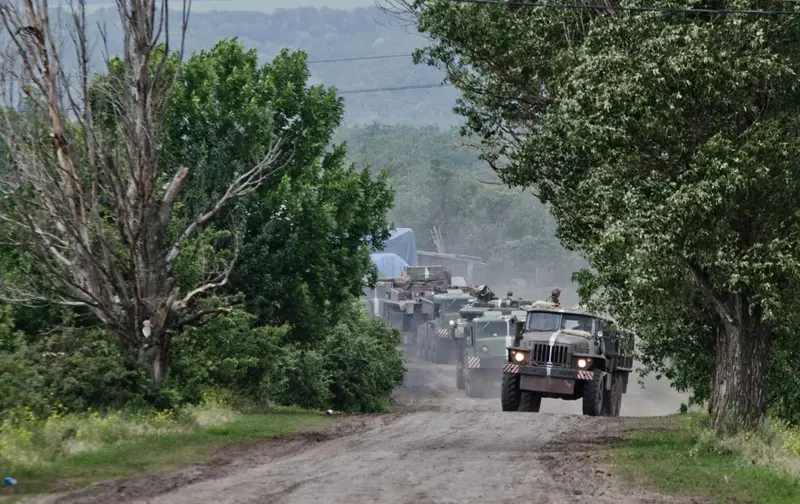
Ukrainian military column on the way to Sloviansk
Since early June, the Ukrainian authorities have begun building up forces on the front line with the rebellious regions. Negotiations with the unrecognized “republics” ended in nothing, and on July 1, after the end of the ceasefire declared by Kyiv, the Armed Forces of Ukraine began shelling cities in Donbas not controlled by the Ukrainian authorities.
GETTY IMAGES
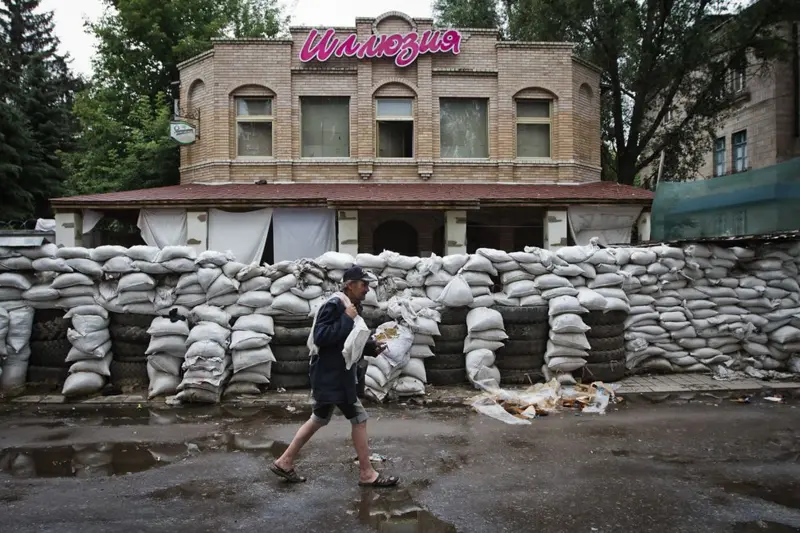
Barricades in Slavyansk
In early July, despite assistance with weapons and equipment from Russia, the “Donbas militia” began to lose territory as a result of artillery shelling and air strikes.
GETTY IMAGES
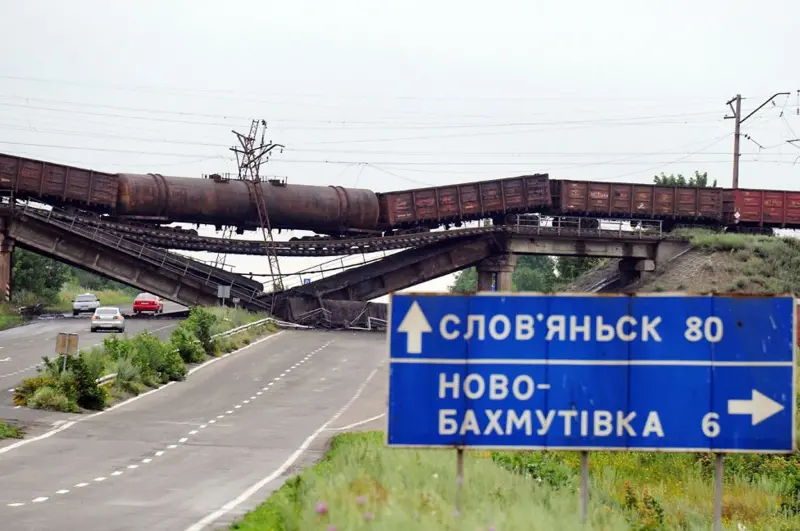
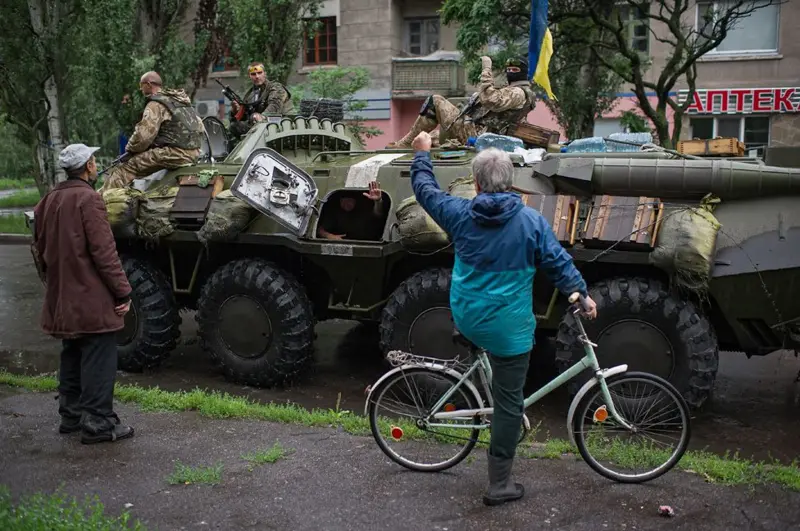
A blown up railway bridge on the road to Slavyansk
In an attempt to slow the advance of Ukrainian troops towards Donetsk, the separatists blew up bridges and mined fields and roads.
GETTY IMAGES
On July 6, pro-Russian forces left Sloviansk, and units of the Ukrainian Armed Forces entered the city.
Igor Strelkov, who by then had become the “Minister of Defense of the DPR,” retreated to Donetsk, warning that the unrecognized republics were under threat of encirclement.
GETTY IMAGES
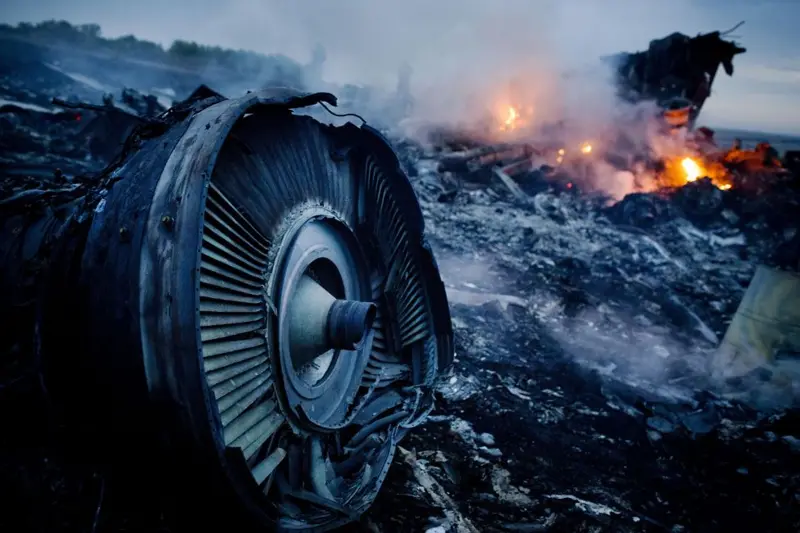
One of the engines of the downed Malaysia Airlines MH17
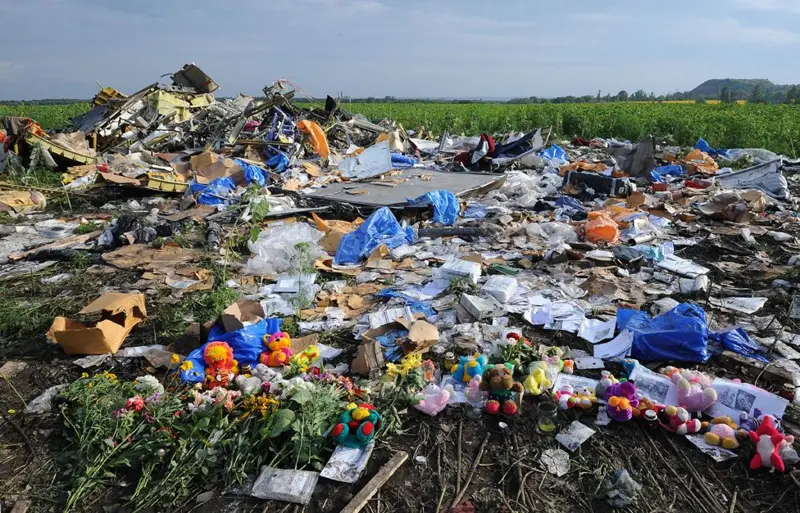
On July 17, 2014, the wreckage of a passenger airliner and the bodies of 298 of its passengers and crew, flying on Malaysia Airlines flight MH17 from Amsterdam to Kuala Lumpur, fell to the ground in a field near the village of Grabov.
Intercepted telephone conversations between the “DPR” military and Strelkov and some handlers in Russia showed that in the first minutes the separatists were sure that they had hit a Ukrainian military plane. Independent studies have proven that the Boeing was shot down by a Buk air defense system delivered from Russia a few hours earlier.
The MH17 disaster became the world’s largest incident involving the destruction of a civilian airliner by military means.
GETTY IMAGES
Flowers among the wreckage of a downed airliner
Russia has denied and continues to deny responsibility for the crash. After several years of investigation, a court in the Netherlands confirmed that the missile at the Boeing was fired from territory controlled by the “DPR” from a Buk missile launcher belonging to the 53rd Anti-Aircraft Missile Brigade, stationed in the Kursk region, which was delivered to the launch area on the day of the crash and removed from there at dawn the next day.
In November 2022, a court in the Netherlands sentenced Igor Strelkov, as well as Serhiy Dubinsky and Leonid Kharchenko, in absentia, to life imprisonment for attacking a civilian airliner and killing everyone on board.
Dubinsky, a former employee of Russia’s Main Intelligence Directorate, was the head of intelligence for the “DPR”, and Kharchenko, a citizen of Ukraine, was his subordinate.
GETTY IMAGES
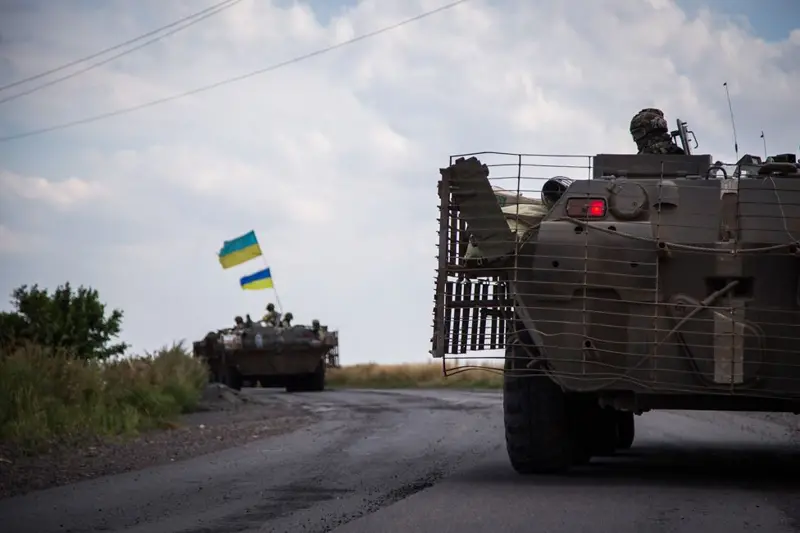
Ukrainian armored vehicles on the outskirts of Debaltseve, Donetsk region
Throughout July and early August, the Ukrainian army continued to push back the “DPR” and “LPR” forces and reached the borders of Donetsk from the north and west.
In early August, the territory controlled by pro-Russian forces had decreased fourfold compared to the beginning of the armed confrontation in April-May.
GETTY IMAGES
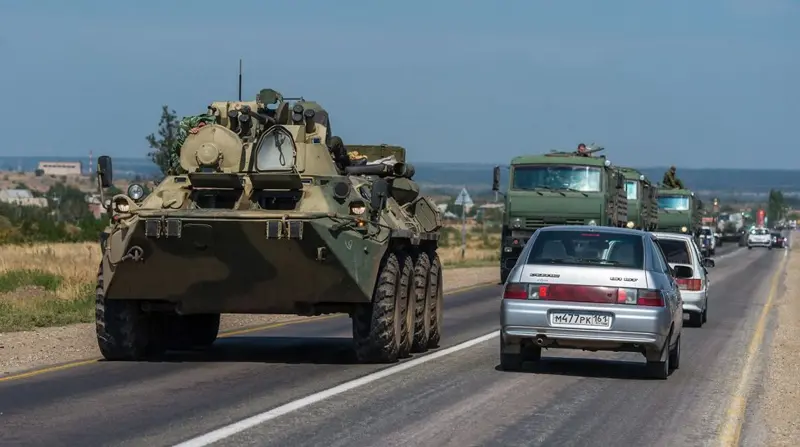
Russian military equipment on the highway in Kamyansk-Shakhtinsky, Rostov Region
Fearing the final defeat of the separatist forces in Donbas, Moscow sent regular army units to their aid. As a result, a large Ukrainian army detachment was surrounded and defeated near Ilovaisk, southeast of Donetsk.
This defeat forced the Ukrainian authorities to begin negotiations with the “DPR” and “LPR”, which ended with the signing of peace agreements in Minsk.
Russia has managed to remain in the role of mediator, continuing to deny that it provides weapons and fighters to separatist formations.
GETTY IMAGES
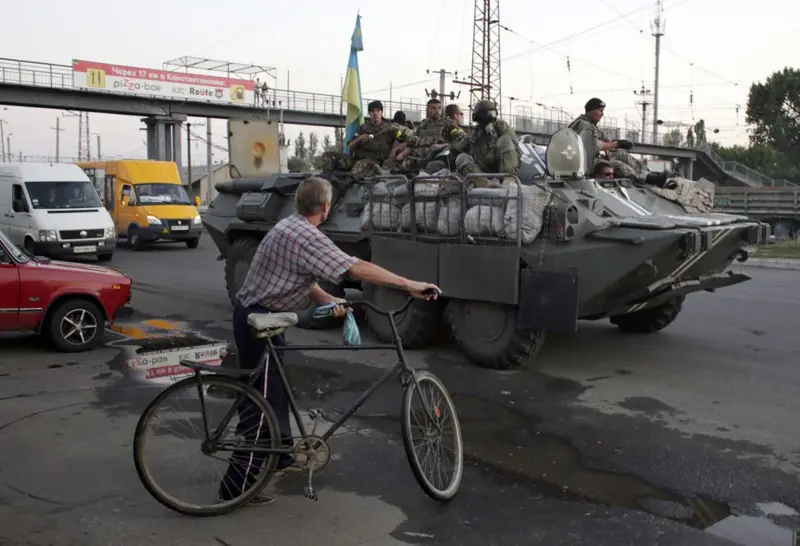
Druzhkivka, Donetsk region, August 2014
At that time, no one, including the residents of Druzhkivka in the Donetsk region, could have known that these places would find themselves on the contact line between unrecognized “republics” and Ukraine for eight years.
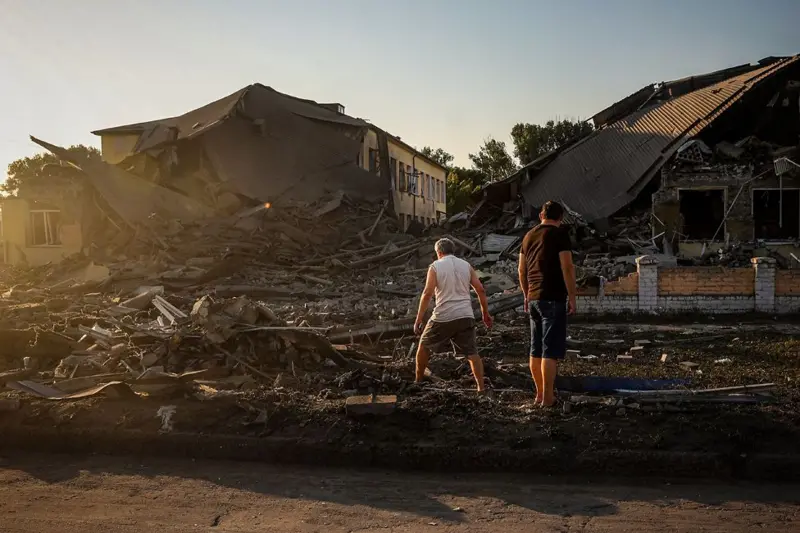
Currently, Druzhkivka is under regular shelling by the Russian army, which is advancing on the positions of the Armed Forces of Ukraine in the third year of a full-scale military invasion of Ukraine.
GETTY IMAGES
Druzhkivka, August 2022. School destroyed by a Russian missile
According to UN estimates, from the spring of 2014 to the end of 2021, the war in eastern Ukraine claimed between 13,200 and 13,400 lives. Among them are 4,200 Ukrainian soldiers, 5,800 soldiers of the so-called “DPR” and “LPR” and servicemen of the Russian Armed Forces, and 3,390 civilians.